
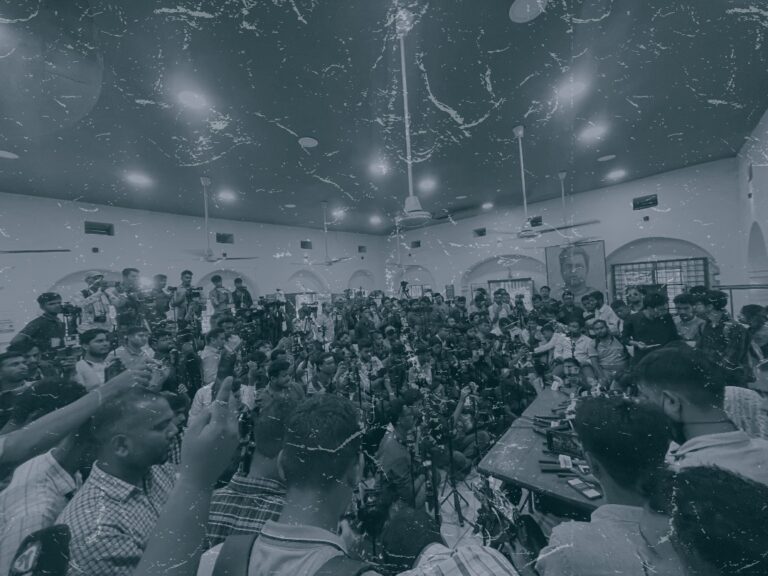
Ismail Sirage: The fiery month of July 2024 will forever be remembered in Bangladesh’s history. Students and ordinary citizens took to the streets against an authoritarian regime, defying bullets, torture, and arrests. What began as a small protest at Dhaka University under the banner of anti-discrimination soon spread across the country. During the brutal police crackdown, students with nothing but their mobile phones livestreamed the shootings and assaults. Through those live videos, people saw the truth unfold in real time and they stood beside the students. From teachers and lawyers to workers and day laborers, people of all classes joined in solidarity. Ultimately, on August 5, the then-Prime Minister Sheikh Hasina stepped down and left the country, marking the dawn of a new political chapter.
Mobile journalism, or ‘Mojo Journalism’ was not a new concept in Bangladesh. Over the past decade, TV stations, online portals, and newspapers had gradually embraced it. But the 2024 uprising turned it into something much more powerful, a voice of the people. Unlike traditional media, mojo journalists were fast, fearless, and close to the ground. Their work earned massive public trust and recognition. Within a year, mojo journalism spread from the capital to rural towns, and almost every media house now has its own mojo team.
However, the same form of journalism that once symbolized courage and truth is now facing a new crisis. Many professional mojo journalists in Dhaka complain that some individuals are exploiting the label ‘mojo journalist.’ They open personal Facebook pages, YouTube channels, or online portals, print fake press cards, and show up at official events pretending to be reporters. Most of them have little or no knowledge of news ethics or editorial practices. As a result, professional journalists often face embarrassment, and the credibility of the entire mojo community is being questioned.
Media professionals fear that this uncontrolled influx of self-proclaimed reporters could become a serious threat to journalism. Many of these individuals record random people or public figures in unprepared moments and upload the clips for social media views, often using misleading captions. Such acts not only violate privacy but also cause humiliation and misinformation. The public, unable to tell real journalists from imposters, begins to mistrust mojo journalism altogether.
Yet, the potential of mojo journalism remains undeniable. It has opened new doors for democratic transparency and citizen-driven media. It ensures fast information flow during crises and creates opportunities for young people to participate in journalism. But to sustain this progress, Bangladesh urgently needs a clear policy framework defining who qualifies as a mojo journalist, how their content should be verified, and under what standards they should be registered.
At the same time, ethical training and a code of conduct are essential-covering privacy protection, responsible content sharing, and professional behavior. Social media-based ‘news channels’ that misuse the press identity should also be regulated to prevent confusion and exploitation.
Mojo journalism is, at its core, a revolutionary concept. It democratizes information and gives ordinary people a voice. But without ethics, regulation, and accountability, this blessing could turn into a curse. The responsibility lies not only with the government but also with the media industry itself. The new generation of mojo journalists must now uphold truth, responsibility, and professionalism because holding a mobile phone doesn’t just mean recording news; it means carrying the weight of truth.