
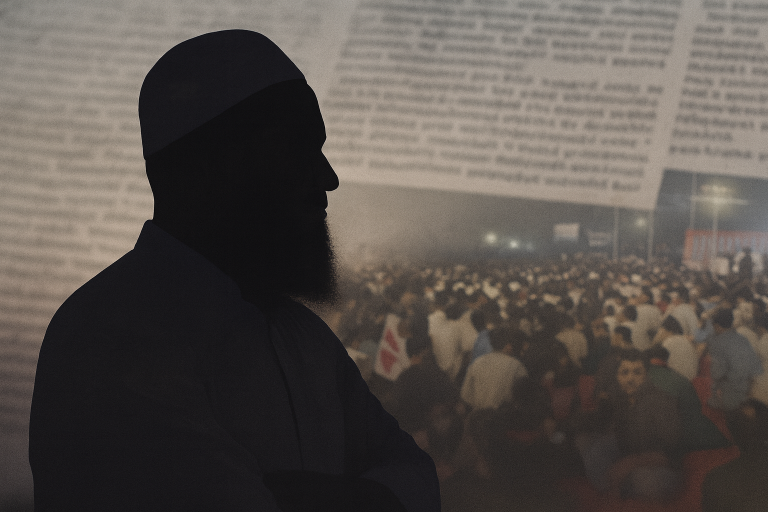
Mehedi Hasan: KM Mamunur Rashid, who was actively involved in the July uprising, went missing on Monday morning, 22 September. Four days later, on Friday afternoon, 26 September, he was found in a sick condition in front of a mosque in Purbachal Sector One. Although the news of his rescue was covered by various newspapers and TV channels, none of the mainstream media reported his disappearance while he was still missing.
After monitoring the situation, Bangladesh Media Monitor observed that the media remained noticeably silent on a politically sensitive disappearance case.
Mamunur Rashid’s wife said, “Except for Channel S, no journalist came to our home or tried to contact us.” A leader of the Anti-Discrimination Student Movement stated that even though they announced a protest rally 50 hours after the disappearance, no media showed up, “yet when another group suddenly called a press conference, channels like Jamuna TV, ATN Bangla, and DBC News were present.”
Bangladesh Media Monitor tried contacting Prothom Alo, The Daily Star, Manabzamin, Kalbela, Jamuna TV, Ekushey TV and Ekattor TV, but none were willing to comment. However, journalist Muktadir Rashid Romeo said, “The media’s silence is hard to understand and quite disappointing.”
Several other journalists were also approached, but they declined to speak due to safety concerns.
International studies have shown that in politically divided or transitional situations, news outlets often avoid covering “high-risk” topics. Researchers call this “strategic silence.” Freedom House has documented that journalists sometimes choose ‘self-censorship’ as a safer alternative to protect themselves or their organizations. A South Asian human rights group noted that “coverage often happens only when there is state approval or international attention.”
This suggests that even when a disappearance or human rights violation clearly has news value, it is often ignored simply because it is not considered politically safe to report on.
Mamunur Rashid’s case shows that the media is still not equally proactive when it comes to political disappearances or human rights issues. Bangladesh Media Monitor believes this is a matter that requires open discussion. It is important to ask, How responsible should the media be in such cases and what challenges are preventing newsrooms from covering them?