
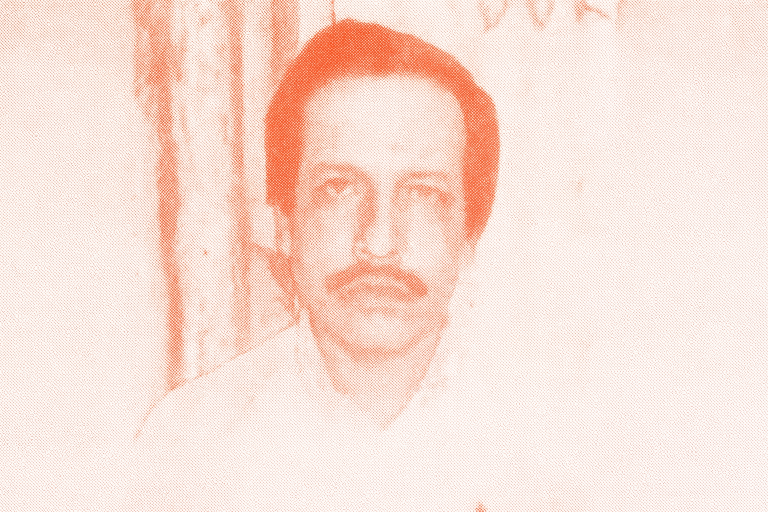
Pradeep Kumar Bhowmik, a local correspondent for Dainik Khoborpotro in Raiganj, Sirajganj, faced severe health and social challenges following the death of his wife in 2021, which left him temporarily paralyzed. Although he regained partial mobility, he continued to struggle with speech impairment. Despite these difficulties, he remained engaged in journalism.
On August 4, 2024, during widespread protests in Raiganj, demonstrators attacked the local Awami League office. As party supporters sought refuge in the nearby Raiganj Press Club, protesters followed and assaulted them. Journalist Pradeep Kumar, who was present at the press club, was violently beaten. He was subsequently taken to a hospital, where he died from his injuries.
Following his death, certain groups attempted to label Pradeep Kumar as a ‘Hindu’ and an ‘Awami League supporter,’ despite the fact that he had been politically associated with the Communist Party of Bangladesh (CPB). This narrative effectively undermined his legacy and contributed to erasing his professional and political identity.
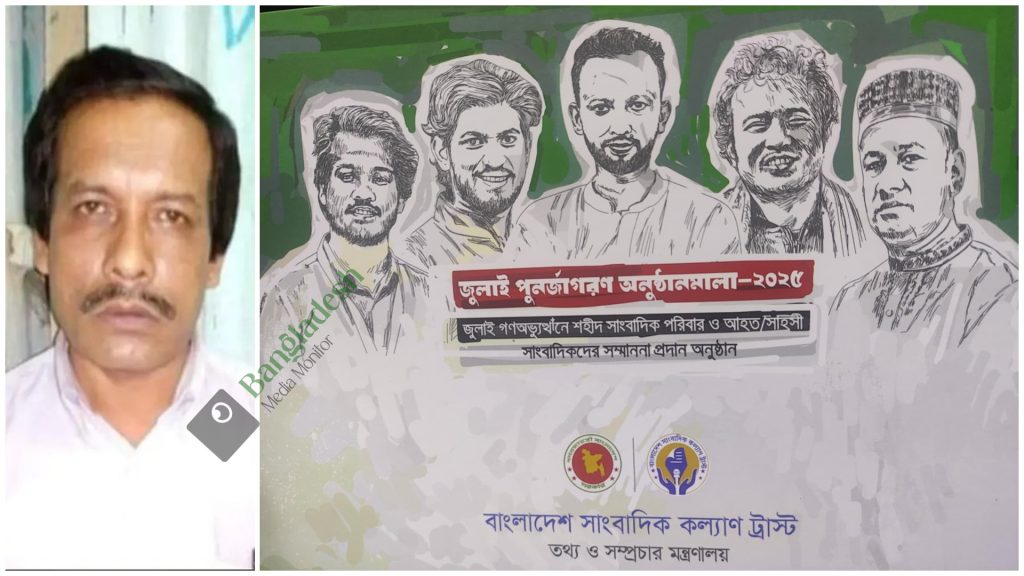
Unlike other journalists killed in connection with political unrest, Pradeep Kumar was not recognized as a martyr of July 2024. The government declined to include his name in official commemorations or programs of the Journalists’ Welfare Trust, while extending recognition and awards to several individuals alleged to have political affiliations or fabricated credentials. When asked to explain this exclusion, Interim Government Information Adviser Mahfuz Alam provided no response.
His son, Sujon Kumar Bhowmik, stated, My father was martyred, yet he never received any government support. Instead, he was branded as a stooge of the Awami League.
No criminal investigation or prosecution has been pursued in relation to his killing. According to local journalists, fear of reprisal and uncertainty regarding the perpetrators have prevented the family from filing a case. Many observers believe that his religious identity as a Hindu and his affiliation with the CPB contributed to the state’s refusal to grant him recognition or justice.
The killing of Pradeep Kumar Bhowmik demonstrates how journalists in Bangladesh, particularly those belonging to minority communities or holding affiliations outside the dominant political spectrum, face systemic marginalization. His case reveals a pattern where political labeling after death is used to distort a journalist’s identity and silence demands for justice. By denying him recognition as a martyr, the state not only erased his professional sacrifice but also signaled that support and acknowledgment are reserved for politically convenient figures.
This selective recognition deepens mistrust among journalists, reinforces the vulnerability of religious and political minorities, and perpetuates a culture of impunity. Ultimately, the absence of accountability in such cases undermines press freedom and erodes public confidence in state institutions responsible for protecting journalists and upholding human rights.