
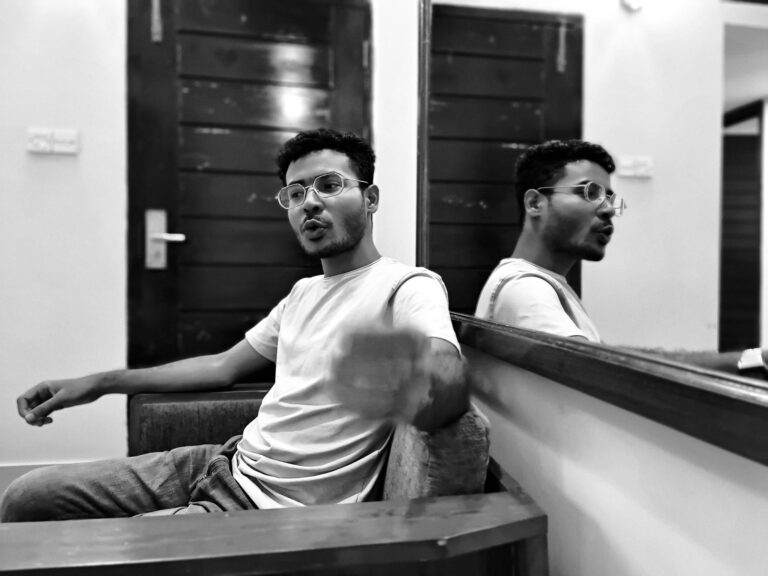
In this edition of Bangladesh Media Monitor’s Interview Section, we speak with Tanbirul Miraj Ripon, an investigative journalist based in Cox’s Bazar who has been closely documenting the Rohingya crisis, armed resistance across the Myanmar–Bangladesh border, de facto governance in Rakhine, the CHT, narcotics networks, and the Bay of Bengal security landscape. His reporting is grounded in firsthand field experience and a distinctly human-focused approach.
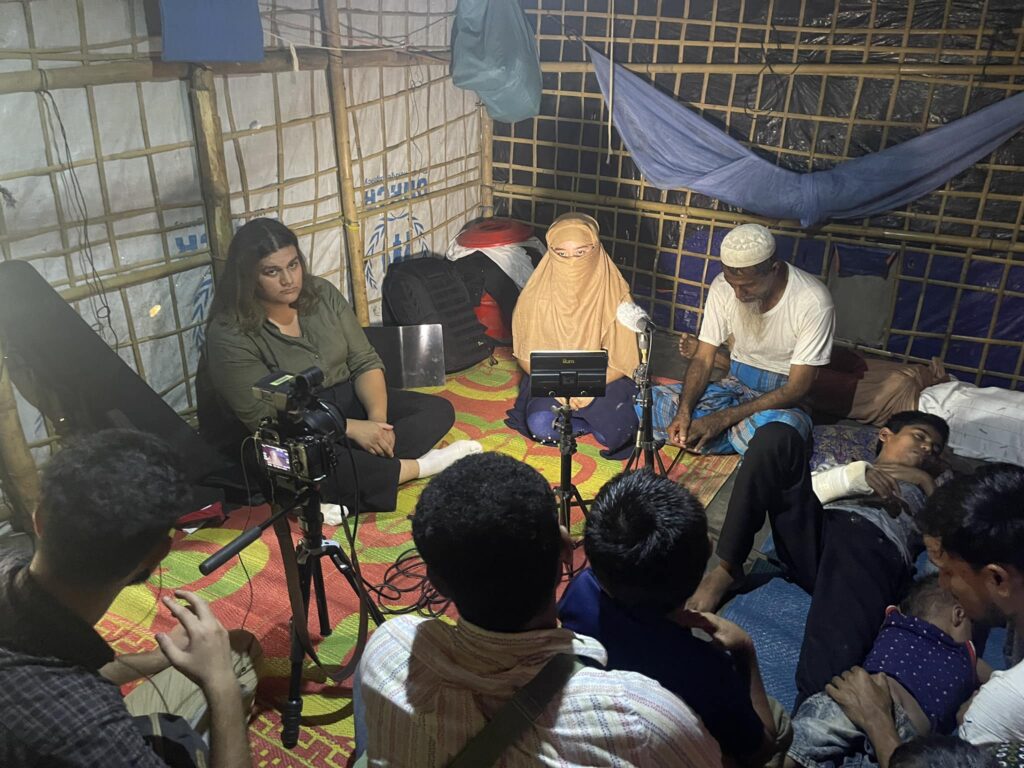
In this conversation, Ripon reflects on the challenges of reporting inside the Rohingya camps, digital surveillance, political pressure, the limitations faced by local journalists and the evolving nature of crisis reporting. His insights offer a rare and nuanced understanding of a region where humanitarian tragedy, geopolitical tension, and media vulnerability intersect-highlighting why ethical, courageous journalism remains indispensable today.
- How long have you been working in Cox’s Bazar, and what subjects do you primarily report on?
Before sharing the years I began my journalism career, let me give you a sense of how curious I am and how deeply I am part of this crisis. I was born in Cox’s Bazar, so for long years our community has been known for hosting Rohingya refugees. Before I started working with international news media outlets, I was already involved in the field.
But if I tell you one of the stories, it’s from 2016, when I was an intermediate student. I was part of a group of great-hearted, naturally grown-up researchers who were mostly working on the ‘civilizations of the Bay of Bengal.’ They were looking for the sources of history in this region. So, I did not work with them, but they took me to the Ghumdum and Tumbru. That time, they shared many thought-provoking stories, and provided me with context, saying it’s sensitive and complicated, and that it will be interesting for me, as i am enthusiastic to know the history. They said, I will find a genuine political sense in this border. As they shared those interesting stories, we had already crossed the Tumbru no-man’s land border, and I saw a beautiful land that is now today’s Rakhine. It was a mixed weather day. It was a very grand adventure for me. Today’s Tumbru, Ghumdum, is not the same as the 2016 Tumbru.
In 2017, Bangladesh and the entire world saw a mass exodus of Rohingya people cross the border to save their lives and ethnicity from their country’s brutal military crackdown in Rakhine. The world as a whole has witnessed the Rohingya exodus. In 2017, I attended the university in Chattogram to pursue my bachelor’s degree in journalism. But I closely kept my eyes on the context.
During the COVID-19 pandemic, I began my career as a journalist. So, on the Rohingya and the border, focus on journalism. My primary focus is particularly on armed resistance in Rakhine, Chinland, NEI, opium cultivation, CHT, and Rohingya refugees, the narco-economy, and the Bay of Bengal. From the beginning of the journey, I had many learning opportunities with my international colleagues and refugees. This geo-region is different from the others in terms of work.
- How has your working style changed since you started reporting on the Rohingya crisis?
My style is always practicing human-focused journalism, telling the human story. My style of journalism has changed a lot in policy in Bangladesh, especially security policy, and Bangladesh is now aware of the human rights violations, the Rohingya education policy, and has allowed civil society to have a voice inside the camps. But still, Bangladesh has to change more; not only Bangladesh, but all stakeholders should modify their model to support the Rohingya people to ensure justice and rights, and repatriate the Rohingya. Before gaining specific knowledge through field reporting, I never achieved particular outcomes, and every story idea has a different angle and outcome. However, I adhere to the principles of journalism.
- What kind of obstacles or limitations do you face when entering or reporting inside the Rohingya camps?
I have faced many different challenges to cover the Rohingya and the Bangladesh-Myanmar border in the previous regime. Nowadays, I have not faced any direct issues yet. However, I am aware of my role and responsibilities, and if any problems arise, I will apply my journalism skills. Human story matters. What I can do against any pressure or threats from anyone is to produce more stories and help more and more journalists cover the context that I am covering, ensuring the story’s legacy.
- Do you feel that the control exerted by the military or administration is affecting the freedom of news gathering?
My local journalist colleagues may face many challenges, I have heard, and I have collected their testimonies and taken notes about their challenges. And I raised the concern about it. We Bangladeshis are vulnerable not only to a particular community, but the previous regime had proven that at any moment, all citizens of Bangladesh are in vulnerable conditions, in every context.
Journalists are not speech actors or civil society; our work consistently produces stories that come to the truth. However, Bangladesh has a traumatic legacy of civil society, so journalists are playing an extra role. A few journalists are talking about contemporary Bangladesh issues to ensure accountability and build a welfare state. It’s our extra role.
Many journalists are facing difficulties; the mob is a threat to all. In the field, the authority has its own strategic way of surveillance. But our work should be continued.
Let me share one concern: authority-sponsored defamations and false propaganda are a regular campaign against quality journalism, nothing new. What is new? We are new, having grown up in the internet era and the surveillance era. They should know and accept that their policies are old, and they should change.
- How do you experience the pressure or influence from local political groups, human rights organizations, or NGOs?
Cox’s Bazar-based local politician does not know me very well. My works are not celebrated works; obviously, my works are for the policy makers, but I am working in Cox’s Bazar regularly, but my face is not that much regular. What I am doing is not famous work at all. So local politicians don’t know my work, but I know them.
Human rights and conflict tracking organizations are doing their best to address these issues. Bangladesh is yet to explore the proper utilization of pre-existing institutions and accountability mechanisms, so pressure groups are created to pressure stakeholders to be accountable. Their research investigation on human rights yields very human recommendations, making their work a valuable source of context. I believe all are helpful, even Bangladesh can assess the border threats through their reports.
Humanitarian organizations are not influencing me; when I need their help, like any data or background context from them, they provide it.
On humanitarian grounds, data can sometimes be a political tool to exploit vulnerable people, so NGOs have an extra duty to protect their beneficiaries from unwanted consequences.
All stakeholders are helping me, including armed group leaders, diplomats, researchers, and government officials. I can say I assure transparency, whatever I am producing. But all are helping, sometimes limited, sometimes filtered.
The current world order has changed; all the border territories are now strictly controlled, and no one is allowing or planning to take refugees. So Bangladesh is not a state out of the world order. Bangladesh should follow the world political trends. But what Bangladeshi people have? What we all have is a great heart, so we are a very slow-developing state, but we are a host of millions of refugees. Is this not the best example?
Every state has its own unique watchdog systems, but what we need? We need a balanced and humane state. We want zero cases of extrajudicial killing, zero cases of politically motivated killing, and zero cases of enforced disappearance by the state. The last political regime victimized everyone; we need a new system which should must be human-focused. I believe it’s very simple to make a state; we just have to coordinate and cooperate inclusively.
- What is the level of security or violence risk while working in the Rohingya camps? Do you have any specific incident you would like to mention?
I am working with the various stakeholders. I didn’t see any insecurities as a reporter from the ground for me. But the Rohingya situation is very miserable; they are living with minimal humanitarian support in the temporary shelters. They are all desperate to return to their own homeland. So, frustration is increasing, and insecurities are increasing. They want to return to Rakhine. They want solutions.
- Do you or your colleagues feel that you have ever been subjected to digital surveillance or phone tapping?
I avoid talking on the direct phone; internet phone calls are also risky. Those who are assigned to tap calls tap all the time. I always think we should write stories; telling stories is our duty. I am a conscious human and obviously a citizen of Bangladesh.
As journalists, we must assess the situation thoroughly before going to the camps, border, or sea. It doesn’t matter if it’s a day event or breaking news. We have to assess security threats.
Once, a particular secret service interrogated me several times in a week, in June 2024. I kept my switched-off phone in their locker with flight mode when I was at their office to face the interrogation. After the interrogation, I received my mobile phone back, with the switch on and the internet enabled. It’s funny, I believe that they took my data and they follow me when they need to understand me. At that time, the state was itself a surveillance-dependent state. Every country has this system, not only Bangladesh, but many Global South states do surveillance politics. Again, what I do, I always tell the stories of the vulnerable to make the people accountable who are not working on time to solve
It’s disturbing, but I am not focusing on that. I have a commitment to ensure credibility to my readers and follow journalistic principles, and tell more stories.
Phone tapping is always a reality. In Bangladesh, covering sensitive issues like the southeastern border is always challenging. Still, as I am young, I am interested in covering sensitive issues; it’s my major focus topic. We should work on ensuring transparency and upholding human rights.
- How much pressure does surveillance by local and foreign entities (such as NGOs, law enforcement, and intelligence units) create for journalists?
Personally, I didn’t experience anything after the political transition. Many are facing, or may face.
- Has this surveillance ever forced you to ‘self-censor’?
I covered Bhashanchar in 2022, so that was a challenging time for journalists. However, during that time, I witnessed dramatic surveillance. I have recently heard from some of my colleagues that they have faced interrogations and are being followed by someone or a group of people following our journlaist moves. But that was a very dangerous timeline for us, and I put my investigations on the same level as what I found in the field. It’s true i didn’t face anything. My case might be exceptional.
- Do you believe that in global media reporting, the voices or security of local journalists are sometimes overlooked?
In policy, it’s not like that, but we should all help each other to continue telling stories, doing journalism, and empowering each other.
11. How effectively are international organizations or media outlets providing protection or psychological support to local journalists?
Very rare for a sole independent journalist, but some offices take care of their independent contract reporters.
- Who do you feel controls the flow of information regarding the Rohingya issue-the government, the NGO network, or international organizations?
No one, on the other hand, you can say everyone. But every institution has its own agenda and mechanism, its own policy and vision. So, everyone has privacy protections for their data, but we have right to ask questions to seek specific data.
- Do you think any party is consciously spreading ‘propaganda’ regarding the Rohingya issue?
Many Rakhine-based and Central Burma-based newspapers have produced baseless news. I have seen manyin my career. Also Bangladeshi media also produce story about xenphobic story, through Bangladeshi media dehumanised Rohingya.
Sad thing is, that many Bangladeshi media have no expert reporter or dedicated reporter on the Rohingya and Bangladesh Myanmar border context. Research reports are the best source of in-depth news, but Bangladesh have limited researcherss on Rohingya issues.
Still we are seeing, Bangladeshi medias are translates the Myanmars intentional media propaganda.
- How difficult is it to maintain neutrality in such a complex political and humanitarian situation?
It’s not difficult; it’s easy. Very simple, follow the principles of journalism ethics. What journalism suggests: why and when journalism matters.
- How do you cope with the mental stress or trauma while working in the Rohingya camps?
I read books, I play music, and I campaign for peace and coexistence. Peace is a process, but it is also a demand. I am thankful to all who help me tell the human stories.
- In future coverage of this crisis, what do you consider the most crucial need for journalists—security, training, or freedom?
If they are Bangladeshi first, they need to know about the Rohingya, CHT, and border resistance; they need to see that humans are suffering. Before writing every story, we assess security; obviously, more in-depth and technical training will help improve our understanding of crisis journalism. Press must be free from all pressure.