
Dr Nayema Tasnim
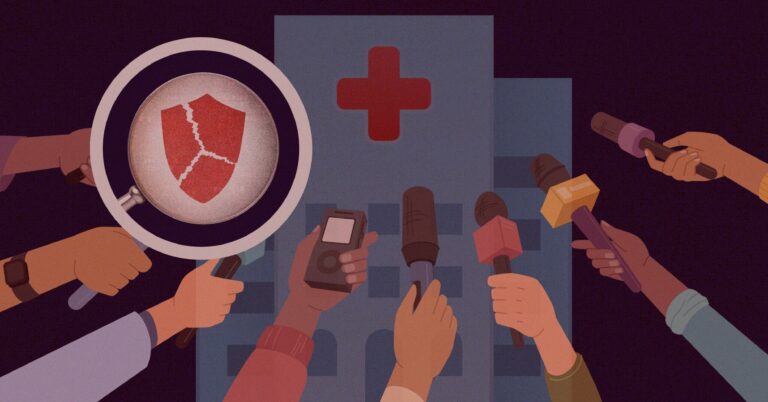
In Bangladesh, the intersection between healthcare and media is no longer occasional; it is constantly unregulated. Hospitals are not just places of treatment; they have become sites of public spectacle whenever a case gains attention. In this environment, the ethical balance between the public’s right to know and a patient’s right to privacy is increasingly fragile.
A qualitative study published in the Central Asian Journal of Medical Hypotheses and Ethics, titled “Hospital Media Relationship and Patients’ Privacy: Codifying the Ethical Guideline,” argues that healthcare institutions must adopt structured, principled communication systems. At its core, the study reinforces a simple but often ignored truth: clinical information belongs to the patient, not the public.
When Illness Becomes Public Property
Applying the framework of this study to the reality in Bangladesh reveals that once a patient becomes newsworthy, privacy often collapses. This breakdown is particularly visible in specific situations, such as the hospitalization of high-profile figures, incidents of violence near medical facilities, and clashes following patient deaths.
When influential individuals or political figures are hospitalized, unofficial medical bulletins begin circulating almost instantly. Details such as diagnosis, procedures, and prognosis are often discussed openly, sourced from unnamed insiders. This sets a risky precedent where doctors face indirect pressure to reveal private data, and media outlets prioritize exclusive scoops over factual precision. The ethical principle of autonomy, a patient’s right to control their own information, is quietly overridden.
As seen in the recent media coverage regarding the medical condition and surgical procedure of NCP leader Sarjis Alam, public disclosure of private health details sparks a significant ethical debate. While acknowledging that public figures are subject to scrutiny, publishing specific clinical details to drive viewership constitutes a severe breach of medical ethics rather than reporting in the public interest.
Similarly, occurrences of violence near healthcare institutions often become media spectacles. The tragic killing of Lal Chand Sohag in front of Mitford Hospital in July 2025 resulted in graphic footage spreading widely. While the incident itself was criminal, the media response raised profound ethical concerns about dignity and exposure in environments where sensitivity should be paramount. Furthermore, clashes between attendants and healthcare workers following patient fatalities are often immediately framed by media narratives as medical negligence, effectively replacing clinical and legal processes with media trials.
The Institutional Vacuum
Even without media presence, patient privacy in many Bangladeshi hospitals is systematically undermined by overcrowded wards, a lack of private consultation spaces, and the presence of multiple attendants during clinical examinations. When cameras enter such environments, the risk multiplies. A patient’s condition being recorded, discussed, and broadcast without meaningful consent is a severe breach of clinical confidentiality.
The Central Asian Journal study emphasizes that these ethical lapses are often institutional rather than individual. In Bangladesh, this vacuum is worsened by several factors:
- Few hospitals have formal media communication policies.
- There is rarely a designated spokesperson system.
- Junior staff may leak information intentionally or under pressure.
- Verbal consent is often assumed rather than properly documented.
Hospitals must recognize that while silence is not always the solution, unstructured communication is much worse. Furthermore, attending medical professionals should not disclose detailed clinical information directly to the national media. The medical board’s primary task is to counsel the patient’s family, who may then choose what to share with the press.
Public Interest vs. Unwarranted Intrusion
The media in Bangladesh operates under intense competition, but speed cannot justify ethical compromise. The justification of “public interest” is frequently misused. Legitimate public interest is limited to public health risks (such as outbreaks), systemic failures affecting many patients, and verified malpractice. It explicitly excludes illegitimate intrusions like detailed personal medical updates, speculation about prognosis, or the unauthorized disclosure of treatment decisions.
Global standards, including the Society of Professional Journalists (SPJ) Code of Ethics, the World Health Organization (WHO) guidelines, and UNESCO principles, universally treat health data as highly private and emphasize minimizing harm.
Consequences of Ethical Breakdown
If current practices continue, the long-term consequences of this ethical breakdown are severe:
- Erosion of Trust: Patients may avoid healthcare or withhold information for fear of public exposure.
- Defensive Medicine: Doctors may prioritize legal and media safety over optimal patient care.
- Politicization of Healthcare: Medical decisions risk being interpreted through political or media lenses.
- Psychological Harm: Patients and families may experience profound distress and public shaming from unwanted publicity.
What Bangladesh Needs Now
To restore balance and ensure systemic reform, stakeholders must implement actionable frameworks:
- National Ethical Guidelines: A standardized protocol for hospital-media interactions, aligned with global ethics. For example, in the United Kingdom, medical professionals are bound by the General Medical Council (GMC) confidentiality guidelines, which strictly prohibit the unauthorized sharing of patient data to ensure a unified national standard of privacy.
- Institutional Policies: Every hospital should establish a media communication unit, written consent protocols, and staff training on confidentiality. This mirrors institutional requirements in Canada, where privacy laws mandate healthcare facilities to designate specific privacy officers and enforce strict communication protocols before any information is released.
- Media Accountability: Journalistic bodies must enforce consent verification standards and penalties for privacy violations. The UK provides a strong model for this through the Independent Press Standards Organisation (IPSO), which enforces a strict Code of Practice restricting journalists from intruding into hospitals or publishing private medical details without explicit consent.
- Legal Reinforcement: Stronger enforcement of privacy laws to deter the misuse of medical information. In the United States, the Health Insurance Portability and Accountability Act (HIPAA) enforces strict federal protections, requiring explicit written consent before any medical details can be shared with the media. Similarly, the European Union’s General Data Protection Regulation (GDPR) classifies medical data as highly sensitive, legally demanding strict consent protocols and imposing severe financial penalties for unauthorized public disclosure.
Conclusion
The relationship between hospitals and the media becomes dangerous without ethical boundaries. As the study highlights, codifying ethical guidelines is essential, not optional. With real incidents demonstrating how frequently patient privacy is compromised in the race for sensationalized reporting, the question now is not whether reform is needed, but whether institutions, media, and policymakers are willing to act before trust is permanently damaged among all stakeholders.